IWA Particle Separation Specialist Group Conference 2026
IWA Particle Separation Specialist Group Conference 2026
(Supported by the Japan Society on Water Environment "Future Vision Fund")
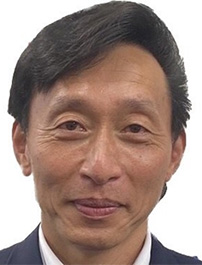
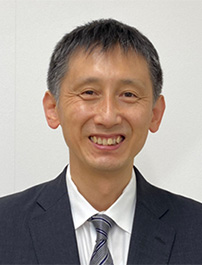
Dr. Taku Fujiwara is currently a Professor at the Graduate School of Global Environmental Studies, Kyoto University. His research interests include nutrient removal and recovery from wastewater treatment systems, photocatalytic degradation of emerging micropollutants, and decarbonized wastewater treatment systems. He has published over 130 peer-reviewed papers, some of which have been published in Japanese journals. He is an IWA Fellow and serves as a journal editor for Water Cycle, Water Science and Technology, Journal of Material Cycles and Waste Management, and Environmental Quality Management. He is also a member of the local organizing committee for the IWA Particle Separation Specialist Group Conference 2026.
The Ministry of Land, Infrastructure, Transport and Tourism of Japan has been promoting the "B-DASH Project" (currently the "AB-Cross Project") to accelerate the research, development, and practical application of innovative technologies within the sewerage sector. Despite these initiatives, the widespread dissemination of developed technologies—particularly in wastewater treatment—has encountered significant challenges. To achieve a decarbonized society by 2050, it is imperative to bridge the gap between technological development and social implementation. Our research group has successfully developed and implemented a "Dual Dissolved Oxygen (DO) Control System" for the oxidation ditch (OD) process, providing a pioneering solution for energy efficiency and enhanced treatment stability.
The system utilizes two distinct DO sensors: the first is positioned immediately downstream of the aeration units to regulate aeration intensity, while the second is located at the end of the aerobic zone to control the ditch flow rate by adjusting the rotation speed of flow boosters. This dual-sensor configuration automatically optimizes the aerobic/anoxic zone ratio, ensuring highly stable effluent quality for both BOD and nitrogen even under fluctuating conditions. Notably, the system achieves a 30% reduction in power consumption compared to conventional OD processes equipped with vertical shaft aerators. Furthermore, it demonstrates robust adaptability to high-load operations, effectively managing temporary excess inflow and high-concentration influent.
This technology originated from fundamental university research and was scaled up through rigorous pilot and demonstration testing via industry-government-academia collaborations. Currently, the system is operational at eight locations across Japan, with further expansion underway. In this presentation, we review the trajectory of this development and its social implementation. We aim to discuss the critical significance of cross-sector partnerships and identify the key factors necessary for successful technological integration in the public sector.
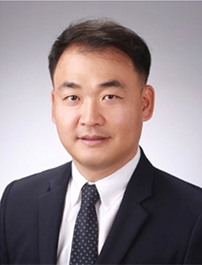
Seoktae (Steve) Kang is a professor in the Department of Civil and Environmental Engineering at Korea Advanced Institute of Science and Technology (KAIST) and the president of Korea society of environmental engineers (KSEE). He completed his Ph.D. from KAIST in 2002 at the Department of Civil and Environmental Engineering, and continued post-doctoral research at Yale University. He started his academic career at the University of Alberta, Canada in 2009, then moved to Kyunghee University in Korea in 2011. Since he joined KAIST in 2015, he has been on expanding his knowledge in the area of separation processes including adsorption and membrane filtration for safe and sustainable water production. He served as the editorial board of Water Research and Korean Journal of Civil Engineering.
Over the past five decades, South Korea has achieved rapid economic growth driven by advances in science and technology. This paper examines key enabling factors behind this transformation through a case study of the technology-transfer pathway of a field-deployed wastewater treatment process developed by the presenter’s group. The Vertical Membrane Bioreactor (VMBR) is a reactor configuration that leverages vertically arranged hydraulic flow to operate coupled aerobic–anoxic processes without additional energy input. In the VMBR, two vertically partitioned zones are operated such that the lower compartment functions as an anoxic tank and the upper compartment as an aerobic tank, enabling high biomass concentrations and low-energy nitrification–denitrification operation. Originally proposed as an innovative concept, the VMBR technology progressed from proposal to completion of development and full-scale implementation in an operating municipal wastewater treatment process within a few years. The unusually rapid translation from laboratory development to field application is attributed to (i) strong market urgency for domestically developed alternatives during a period when early membrane bioreactor (MBR) technologies were consolidating market dominance, (ii) Korea’s highly goal-oriented “ppalli-ppalli” (fast-paced) execution culture, (iii) an engineering-oriented corporate culture that encourages iterative problem solving through failure-tolerant development cycles, and (iv) a societal emphasis on education that supplies abundant highly trained human capital, facilitating rapid learning and effective troubleshooting. Together, these factors illustrate how institutional urgency, cultural execution norms, and human-resource capacity can compress innovation-to-deployment timelines for complex environmental technologies.
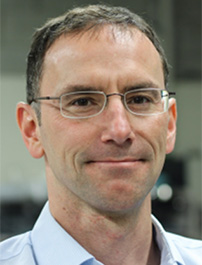
Dr. Bérubé is a Professor in Civil Engineering at UBC. He has over 30 years of research and consulting experience in water quality and treatment, with a focus on membrane technologies. His work has generated new research tools, and in partnership with industry, new processes and products that have become industry standards. He is a board member of the Canadian Association on Water Quality and a Management Committee member of the IWA Specialist Group on Membranes.
The translation of university-developed technologies into real-world practice offers a unique opportunity to address emerging challenges where conventional solutions fall short. This talk examines the pathway from academic innovation to sustained industrial and community adoption through the case of Passive Membrane Filtration (PMF), a gravity-driven drinking water treatment technology developed at the University of British Columbia (UBC) specifically to address the limitations of conventional systems in small and remote communities.
PMF was conceived in response to the high operational complexity, cost, and capacity requirements of conventional water treatment technologies, which often render them impractical or unsustainable in small and remote settings. By leveraging low-pressure operation, biofilm-mediated treatment, and passive hydraulic cleaning, PMF offers a robust, low-energy, and operator-friendly alternative aligned with local capacity and governance realities. The talk draws on the first five years of full-scale operation of a PMF system at the Klehkoot Reserve of the Hupacasath First Nation, which demonstrated consistent compliance with drinking water quality regulations, stable long-term performance, and resilience to seasonal variability—key prerequisites for adoption beyond the research context.
Building on this demonstrated success, the presentation explores how long-term partnerships among UBC, the community, regulators, and industry enabled trust, regulatory acceptance, and operational confidence—factors as critical as technical performance in achieving adoption. The talk further outlines ongoing and planned research aimed at supporting broader implementation across additional communities, focusing on transferable design and operation protocols, integration of local knowledge and governance frameworks, and mechanisms for scaling the technology while preserving its contextual relevance.
Overall, the talk highlights that successful adoption of novel university-developed technologies requires more than innovation alone: it demands sustained engagement, co-development with end users, regulatory alignment, and iterative learning from full-scale implementation. Passive Membrane Filtration provides a compelling example of how these elements can converge to deliver meaningful, durable impact in communities for whom conventional solutions have repeatedly fallen short.
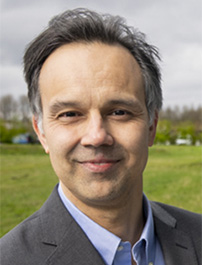
Prof. Emile Cornelissen is Principal Scientist at KWR Water Research Institute and part-time professor at Ghent University. His research focuses on membrane technology, including fouling, membrane integrity, concentrate management, removal of organic micropollutants, and innovative processes. He supervises several PhD candidates, has published over 150 articles, and has received multiple innovation awards.
Water treatment research and membrane technology are fundamentally driven by the effective translation of scientific findings into practical solutions for global water challenges-benefiting both the water sector and industrial end-users.
This approach has led to the development of innovative membrane-based concepts, such as Air/Water Cleaning (AWC) for spiral-wound membrane elements to control fouling, and the implementation of Fluidized Ion Exchange (FIX) for improved water purification and natural organic matter (NOM) removal. Both innovations began at the lab-scale and ultimately reached full-scale application within approximately ten years. More recent efforts focus on addressing critical water quality issues, including the rejection of emerging contaminants like PFAS through various membrane technologies, and the application of novel virus monitoring techniques for quantifying membrane integrity.
The success of this science-to-practice integration is illustrated by several large-scale and pilot projects, including the Ganzenpoot pilot in Nieuwpoort, where water utilities test a flexible intake system combining fresh, brackish, and seawater using Closed Circuit Reverse Osmosis (CC RO). The initiative contributes to a climate robust drinking water supply for coastal Flanders.
This integrated research-spanning from fundamental investigation to real-world application-is essential for advancing sustainable water management and resource recovery. The approach combines a deep understanding of membrane materials and water chemistry with the design of treatment processes suited to specific environmental contexts and aligned with client needs. Close collaboration and effective communication with stakeholders ensure solutions that are both functional and durable.
In this lecture, Prof. Cornelissen will share experiences in translating scientific research into practical applications in the field of water treatment and membrane technology at KWR Water Research Institute and within the Particle and Interfacial Technology (PaInT) Group at Ghent University.